```html
How to Bargain in Istanbul
Bargaining in Istanbul is more than a way to get a better price. It can also
be a friendly cultural interaction shaped by local shopping traditions and
everyday social habits. In many traditional markets, negotiating is a normal
part of the shopping experience.
Bargaining should usually feel like a polite conversation rather than an
argument. The aim is to find a price that is acceptable to both the customer
and the seller.
This guide explains how bargaining works in Istanbul, where it is
appropriate and how to negotiate respectfully. You will also find practical
tips for shopping in bazaars, local markets and independent stores.
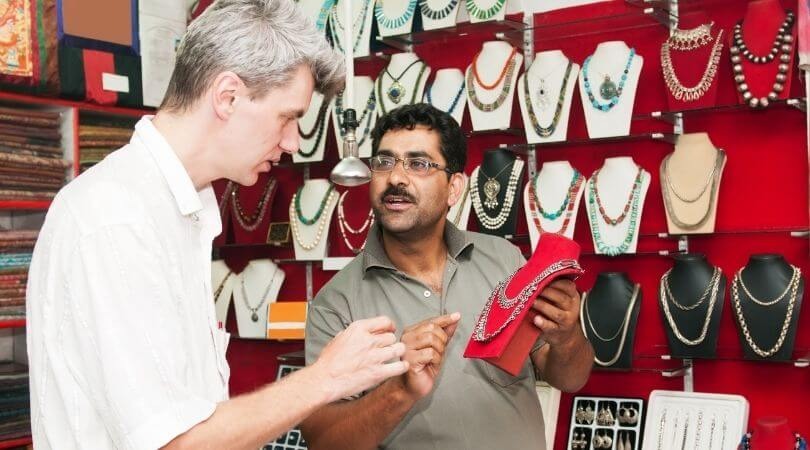
Bargaining in Turkish Culture
Bargaining has long been associated with traditional markets in Türkiye.
However, this does not mean that every Turkish customer bargains or that
negotiating is accepted in every shop.
It is most common in historical bazaars, neighbourhood markets, antique
shops and some independently owned stores. The conversation usually begins
after the seller gives the first price.
A friendly attitude is important. Greeting the seller, asking questions
about the product and showing genuine interest can create a more comfortable
negotiation.
What Does “Rounding Down the Price” Mean?
A common and simple form of bargaining is asking the seller to round down
the total price. This is sometimes easier than asking for a large discount.
For example, imagine that several items from a local market cost
1,280 TL in total. You could politely ask whether the seller
would accept 1,250 TL.
Similarly, if a souvenir or handmade item is offered for
3,200 TL, you might ask whether
3,000 TL is possible.
These amounts are only examples based on a more realistic 2026 price scale.
They are not fixed market prices. The actual cost can change according to
the product, material, workmanship, quality and seller.

Where Can You Bargain in Istanbul?
Bargaining is generally more acceptable in places where prices are flexible
or individually quoted. It is especially common when purchasing handmade
goods, jewellery, carpets, leather products, antiques or several items from
the same seller.
-
Grand Bazaar
- Neighbourhood street markets
- Flea markets and antique markets
- Independent souvenir shops
- Carpet and kilim stores
- Leather shops
- Some jewellery and silver shops
- Small independently owned boutiques
Even in these places, not every price is negotiable. A seller may clearly
state that the displayed price is final.
Where Should You Not Bargain?
Bargaining is not normally accepted in businesses that use fixed prices.
Trying to negotiate in these places may create an uncomfortable situation
for both the customer and the employee.
- Shopping mall stores
- Supermarkets and convenience stores
- Restaurants and cafés
- International chain stores
- Pharmacies
- Museums and official attractions
- Cinemas, theatres and concert venues
- Public transportation
- Hotels with published room rates
- Shops with clearly displayed fixed prices
How to Bargain in Istanbul Step by Step
Step 1: Understand What You Are Buying
Learn as much as possible about the product before discussing the price.
This is especially important when buying carpets, jewellery, leather,
antiques or handmade products.
Ask about the material, origin, size, age and production method. When
purchasing jewellery, ask about the weight, metal quality and workmanship.
Comparing similar products in several stores can help you understand the
general price range.

Step 2: Let the Seller Give the First Price
Avoid announcing your maximum budget at the beginning. Ask a simple
question such as:
“How much is this?”
This allows you to hear the seller's starting price before making an offer.
You can then decide whether the amount is reasonable and whether you want to
continue the conversation.
Step 3: Compare Before Making an Offer
Do not feel that you must buy the first item you see. Similar souvenirs,
textiles and accessories may be available in several stores.
Comparing prices does not mean choosing only the cheapest product. Quality,
authenticity, material and workmanship can create major price differences.
Step 4: Make a Reasonable Counteroffer
Avoid starting with an extremely low offer. An unrealistic amount may end
the conversation or make the negotiation feel disrespectful.
There is no fixed discount percentage that works in every shop. For a
lower-priced item, asking for the total to be rounded down may be enough.
For a more expensive product, there may be more room for negotiation.
You can use simple phrases such as:
- “Is this your best price?”
- “Can you offer a small discount?”
- “What would the price be if I bought two?”
- “Could you make it 3,000 TL?”
Step 5: Ask About a Multiple-Item Discount
Sellers may be more willing to offer a discount when you buy several items.
Instead of negotiating every item separately, ask for the total price.
For example, you can say:
“What is your best total price if I buy all three?”
This often creates a simpler and friendlier negotiation.
Step 6: Ask Whether Cash Changes the Price
Cash can sometimes help during a negotiation in small independent shops
because the payment is immediate. However, this is not guaranteed, and many
Istanbul businesses accept cards without changing the price.
Paying by card does not mean that you personally pay additional VAT. Taxes
apply to the sale itself, regardless of whether you pay by cash or card.
Before agreeing to a cash purchase, confirm the final amount and ask for a
receipt. For expensive products, card payment may provide a clearer payment
record.
Step 7: Remain Calm and Friendly
Your behaviour can affect the tone of the conversation. Speak calmly, smile
and avoid treating bargaining as a competition.
You do not need to hide your interest completely. It is better to show that
you like the product while also explaining that the price is higher than
your budget.
A simple sentence can be effective:
“I really like it, but the price is more than I planned to spend.”
Step 8: Be Ready to Walk Away Politely
You are not required to complete the purchase. When the price does not suit
your budget, thank the seller and leave politely.
The seller may make one final offer, but this does not always happen. Do not
walk away only as a performance unless you are genuinely comfortable with
leaving the product behind.
Step 9: Confirm the Final Price
Before paying, confirm the agreed amount and what is included. This is
particularly important when purchasing products that require delivery,
alterations, packaging or international shipping.
Ask whether the total includes:
- Taxes
- Packaging
- Delivery
- Alterations
- Shipping
- Card payment
Does Your Appearance Affect the Price?
Some sellers may try to understand a customer's budget from their clothing,
behaviour, language or level of interest. However, there is no need to
change how you dress simply to go shopping.
The best approach is to remain clear and confident. Research the product,
compare prices and decide on a maximum budget before beginning the
negotiation.
Avoid revealing how much money you are carrying or providing unnecessary
personal information.
Important Tips for Expensive Purchases
Extra care is necessary when buying carpets, antiques, jewellery, gemstones
or high-value handmade products. A large discount does not automatically
mean that you are receiving a good deal.
- Ask for a detailed receipt.
- Check the material and product description.
- Confirm the weight and purity of precious metals.
- Ask about return and exchange conditions.
- Do not make a rushed decision.
- Be careful with claims about age, rarity or authenticity.
- Confirm shipping and customs responsibilities in writing.
Useful Bargaining Phrases
- How much is this?
- Is this a fixed price?
- What is your best price?
- Can you offer a small discount?
- Is there a discount if I buy two?
- Can you round down the total?
- Does the price include tax?
- Can I pay by card?
- Could I have a receipt, please?
Final Thoughts
Bargaining in Istanbul can be an enjoyable part of shopping when it is done
respectfully. It is most suitable in historical bazaars, open markets and
independent stores where prices are not clearly fixed.
Research the product, let the seller state the first price and make a
reasonable counteroffer. Stay friendly, confirm the final amount and never
feel pressured to buy something that does not suit your needs or budget.
The best bargain is not always the largest discount. It is a fair price for
a product that you genuinely want and understand.
```