A Glimpse into History
Emperor Justinian I, renowned for his grand architectural projects like the Hagia Sophia, commissioned the construction of this church between 527 and 536 CE. Initially named the Church of Saints Sergius and Bacchus, it honored two Christian martyrs. The church's unique design, featuring a central dome, was groundbreaking at the time and possibly influenced the larger Hagia Sophia's construction.
After the Ottomans captured Constantinople in 1453, the church was converted into a mosque, known as Kucuk Ayasofya Camii or Little Hagia Sophia Mosque. A minaret and a religious school were added. Despite challenges like earthquakes and dampness, and even serving as a shelter during wars, the mosque remains a significant historical site thanks to extensive restoration efforts.
Architectural Marvel
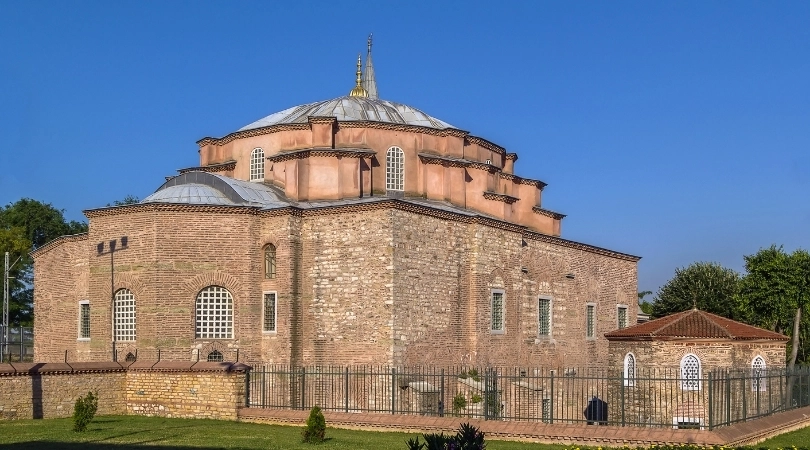
From the outside, the Little Hagia Sophia Mosque's design is simple yet elegant, reflecting the architectural techniques of its time. The structure is octagonal, with a magnificent dome supported by eight pillars. As you approach, a charming courtyard with a small garden and fountain welcomes you, creating a tranquil space to pause and appreciate the surroundings.
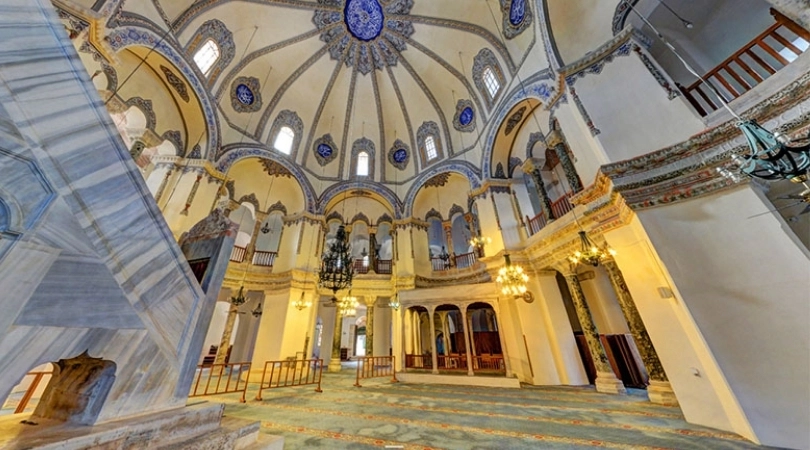
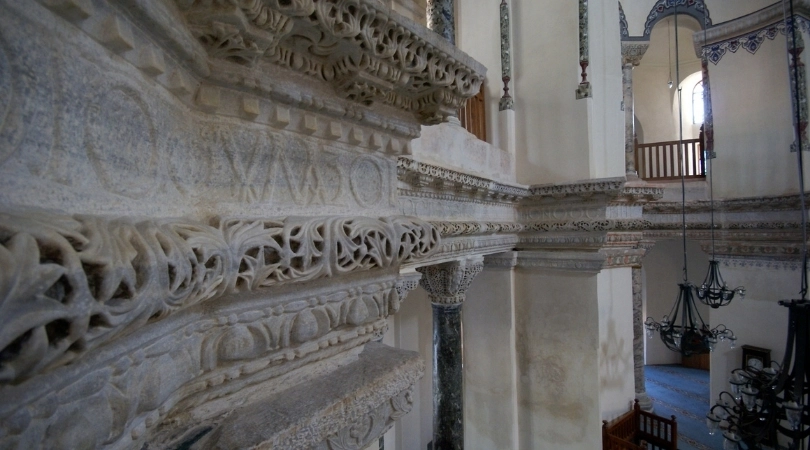
Inside, the mosque's grandeur unfolds. A two-story arcade along the north, west, and south sides is adorned with verd antique and red Synnadic marble columns. These columns, showcasing the craftsmanship of centuries past, support a dome pided into sixteen sections. An inscription in twelve Greek hexameters honors Emperor Justinian, his wife Theodora, and Saint Sergius, adding historical significance to the interior.
Stories and Legends
The Little Hagia Sophia, while not as legendary as its larger counterpart, has its share of intriguing tales. One legend tells of Emperor Justinian, who, before becoming emperor, was accused of treason. Saints Sergius and Bacchus appeared to Emperor Justin I in a dream, advocating for Justinian's innocence. Grateful for their intervention, Justinian vowed to build a church in their honor, leading to the creation of the Little Hagia Sophia.
Another tale highlights the architectural significance of the mosque, suggesting it served as a testing ground for techniques perfected in the grand Hagia Sophia. Though not supernatural, this legend underscores the innovative spirit of Byzantine architecture.
Whispers of hidden treasures within the mosque's walls persist, believed to have been concealed during the Ottoman Conquest. While the existence of such treasures remains uncertain, the legend adds a sense of mystery to the site.