Historic synagogues in Istanbul reflect the city’s long Jewish heritage, with strong roots in Galata, Balat, Karakoy, Ortakoy and Kadikoy. After the Ottoman conquest of Constantinople in 1453, Jewish life continued in the city, and the arrival of Sephardic Jews after 1492 made Istanbul one of the most important Jewish centers of the Ottoman world.
Today, many synagogues in Istanbul are still active places of worship. Visitors should remember that most synagogues are not regular tourist attractions. Advance permission, passport or official ID, and security checks are usually required before entering.
1. Neve Shalom Synagogue – The Heart of Sephardic Jewish Life in Galata
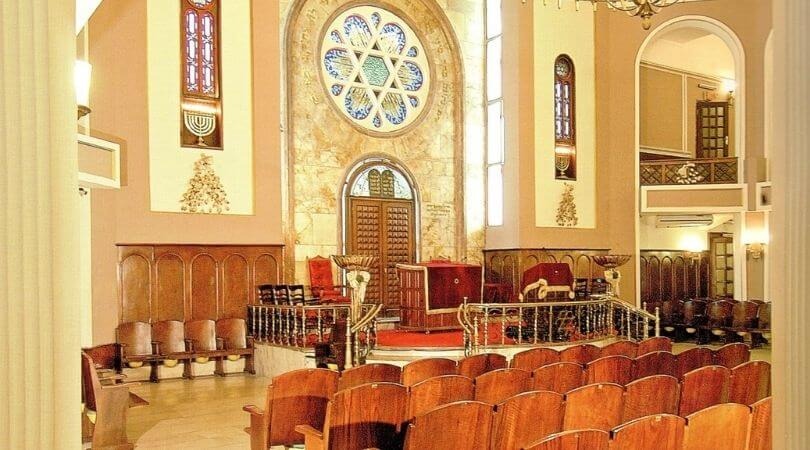
Located within walking distance of Galata Tower, Neve Shalom Synagogue is the largest and most important Sephardic synagogue in Istanbul. Opened on March 25, 1951, it was built to meet the growing needs of the Jewish community that had increasingly settled around Galata during the 20th century. Its name, meaning "Oasis of Peace," reflects the synagogue's role as both a religious and cultural center.
Today, Neve Shalom remains the spiritual heart of Istanbul's Jewish community and regularly hosts religious ceremonies and community events. The synagogue is also closely connected with the Jewish Museum of Turkey, while the former school building beside it now serves as the Neve Shalom Cultural Center, making this area one of the most meaningful destinations for anyone exploring Jewish heritage in Istanbul.
Why Visit?
One of the most important Sephardic synagogues in Istanbul
Closely connected with the Jewish Museum of Turkey
Located near Galata Tower, Karakoy, and Istiklal Street
Excellent starting point for discovering Istanbul's multicultural history.
Visiting Hours
Sunday–Thursday: 10:00 – 17:00
Friday: 10:00 – 13:00
Closed on Saturdays (Shabbat), national holidays, and Jewish religious holidays.
Last admission is usually 45 minutes before closing.
Location
Bereketzade, Büyük Hendek Street No:61, Beyoğlu / Galata
2. Ahrida Synagogue – One of the Oldest Historic Synagogues in Istanbul
Located in the colorful streets of Balat, Ahrida Synagogue is widely considered one of the oldest surviving synagogues in Istanbul. Originally built around 1460 by the Romaniote Jewish community, it later became closely associated with Sephardic Jews who arrived from Ohrid after settling in the Ottoman Empire.
Throughout its long history, the synagogue has undergone several restorations while preserving its remarkable character. Its most famous feature is the unique boat-shaped tevah (bimah), believed by many to symbolize either Noah's Ark or the ships that carried Sephardic Jews from Spain to safety in Ottoman lands.
As one of the finest examples of Jewish heritage in Istanbul, Ahrida represents the transition from the Byzantine Jewish community to the flourishing Sephardic culture of the Ottoman period.
Why Visit?
One of the oldest synagogues in Istanbul
Famous for its boat-shaped tevah
Rich connection to both Romaniote and Sephardic Jewish history
Located in the historic Balat district
Easy to combine with a Balat and Golden Horn walking tour.
Visiting Hours
Weekdays: 10:00 – 14:00
Closed after 12:00 on Fridays, during Shabbat, and Jewish holidays.
Location
Ayvansaray, Kürkçü Çeşmesi Street No:7, Fatih / Balat
3. Yanbol Synagogue – A Hidden Jewish Landmark in Balat
Just a short walk from Ahrida Synagogue, Yanbol Synagogue is another remarkable example of Istanbul's Jewish heritage. Originally founded by Romaniote Jews during the Byzantine period, it later became associated with Jewish families arriving from Yanbol (modern-day Yambol, Bulgaria).
Its beautifully painted wooden ceiling is among its most distinctive features. Following the devastating Balat fire, the ceiling was reconstructed in 1895 while preserving much of its artistic character. Compared to other synagogues, Yanbol offers a quieter and more intimate glimpse into the everyday history of Istanbul's Jewish community.
Why Visit?
Historic synagogue in Balat
Beautiful painted ceiling and wooden interior
Close to Ahrida Synagogue
Connected with Jewish migration from Bulgaria
Less crowded than many other heritage sites.
Visiting Hours
Weekdays: 10:00 – 14:00
Closed after 12:00 on Fridays, during Shabbat, and Jewish holidays.
Location
Ayvansaray, Lavanta Street No:7, Fatih / Balat
4. Ashkenazi Synagogue – Istanbul's Historic Ashkenazi Landmark
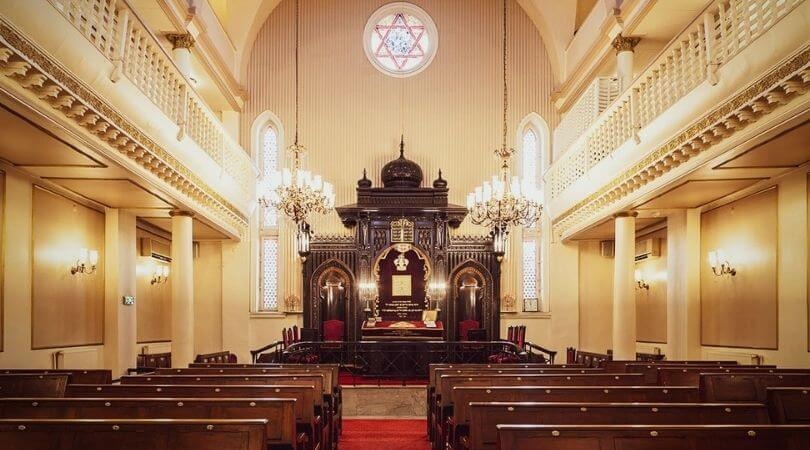
Located on Yüksekkaldırım Street near Galata Tower, the Ashkenazi Synagogue represents the history of Istanbul's Ashkenazi Jewish community. After an earlier synagogue was destroyed by fire in 1866, the current building was completed in 1900 by Jews of Austrian origin.
Unlike Istanbul's predominantly Sephardic synagogues, this synagogue reflects the traditions of the Ashkenazi community, making it one of the city's most distinctive religious landmarks. Today, it remains one of the few active Ashkenazi synagogues in Türkiye.
Why Visit?
One of the few active Ashkenazi synagogues in Türkiye
Rich European architectural influences
Located close to Galata Tower and Karakoy
Interesting contrast between its modest exterior and decorative interior.
Visiting Hours
Generally open during prayer services on Monday, Thursday, Saturday mornings, and Friday evenings.
Location
Müeyyedzade, Yüksek Kaldırım Street No:27, Beyoğlu / Galata
5. Hemdat Israel Synagogue – Jewish Heritage on Istanbul's Asian Side
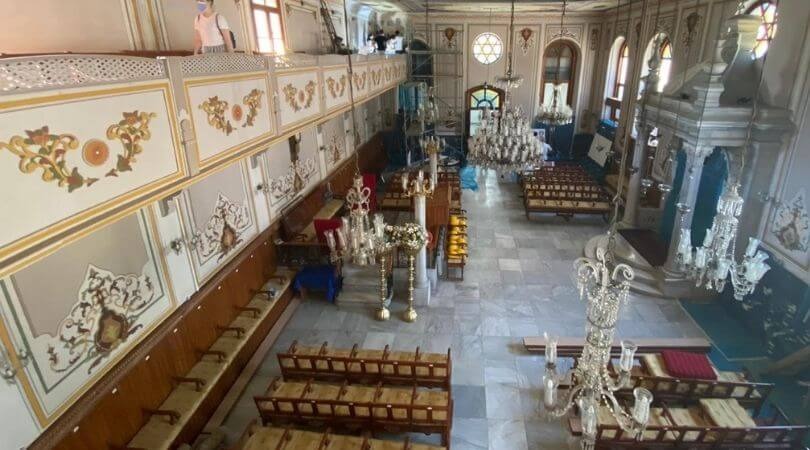
Hemdat Israel Synagogue is the oldest active synagogue on Istanbul's Asian side. Built in 1899 to serve the growing Jewish community around Kadikoy and Haydarpasa, it remains an important center of Jewish life today.
Historical accounts associate its construction with Sultan Abdulhamid II, who reportedly ordered soldiers from nearby Selimiye Barracks to protect the building during construction after objections were raised. The synagogue celebrated its centennial in 2000.
Why Visit?
The oldest active synagogue on Istanbul's Asian side
Connected with Kadikoy's historic Jewish community
Built during the late Ottoman period
Easy to combine with a Kadikoy walking tour
Visiting Hours
Open during morning and evening prayer services.
Location
Rasimpaşa, İzzettin Street No:61, Kadıköy
6. Etz Ahayim Synagogue – The Historic Synagogue of Ortakoy
Meaning "Tree of Life," Etz Ahayim Synagogue stands near the Bosphorus in Ortakoy. Historical records mention the synagogue as early as the 18th century, although it has been rebuilt several times after destructive fires.
One of its most significant restorations followed the devastating fire of 1813, when the influential Camondo family helped rebuild the synagogue in 1825. After another major fire in 1941, only the marble Aron HaKodesh survived. The present building was reconstructed in 1977 and reopened for worship in 1994.
Why Visit?
Historic synagogue overlooking the Bosphorus
Fascinating story of resilience and restoration
Associated with the influential Camondo family
Easy to combine with Ortakoy Mosque and the Bosphorus waterfront.
Visiting Hours
Open during morning and evening prayer services.
Location
Ortaköy, Muallim Naci Avenue No:6, Beşiktaş
Things to Know Before Visiting Synagogues in Istanbul
Synagogues in Istanbul are active religious and community spaces. For security and religious reasons, visitors usually need to plan ahead.
- Advance permission may be required.
- Passport or official ID is necessary.
- Security checks are standard at the entrance.
- Some visits require reservation at least 3 days in advance.
- Shabbat, Jewish holidays and national holidays can affect visiting hours.
- Visitors should dress respectfully and follow the instructions given on site.
For travelers, the easiest areas to explore Jewish heritage in Istanbul are Galata, Balat, Ortakoy and Kadikoy. Galata can be combined with Galata Tower and Karakoy, Balat with the Golden Horn, Ortakoy with the Bosphorus, and Kadikoy with the Asian side ferry route.
Please note that many synagogues in Istanbul are active places of worship, not regular tourist attractions. Visitors may need to arrange their visit in advance, carry a passport or official ID, and pass through security checks before entering.